Chartmetric

Identifying Growth Levers Through Data to Drive Fan Acquisition

Identifying Growth Levers Through Data to Drive Fan Acquisition, a playbook by Chartmetric and Base for Music.

Introduction: Why Most Music Marketing Spend Goes to Waste

Music teams have access to more data than ever. The challenge is knowing what to do with it.

From Data to Decisions

Streams, listeners, social engagement, playlist activity, fan behavior, and campaign performance can all tell you something about an artist. But looking at any one of these metrics in isolation can lead to the wrong conclusion. A spike in streams might signal growing demand, or it might disappear a week later. An artist's biggest market might seem like the obvious place to invest, while a smaller market growing much faster could represent a bigger opportunity.

The goal isn't simply to collect more data. It's to connect the right signals, understand what they say about an artist's momentum, and use those insights to make better marketing decisions.

This playbook developed in collaboration between Chartmetric and Base for Music looks at that process from beginning to end: identifying growth opportunities, building a strategy, activating campaigns, and using the results to make the next investment smarter.

1. How to Identify Growth Opportunities Before You Spend

Effective fan acquisition starts long before a campaign goes live. The groundwork is analytical: understanding where an artist stands, where momentum is building, and where the highest-potential audiences are.

What metrics reveal an artist's true momentum

There isn't one metric that defines momentum. A better picture comes from tracking how an artist's audience evolves across multiple platforms at once.

  • Start with growth velocity: week-over-week and month-over-month changes in listeners, streams, followers, saves, and playlist reach tell more about an artist's trajectory than total numbers alone
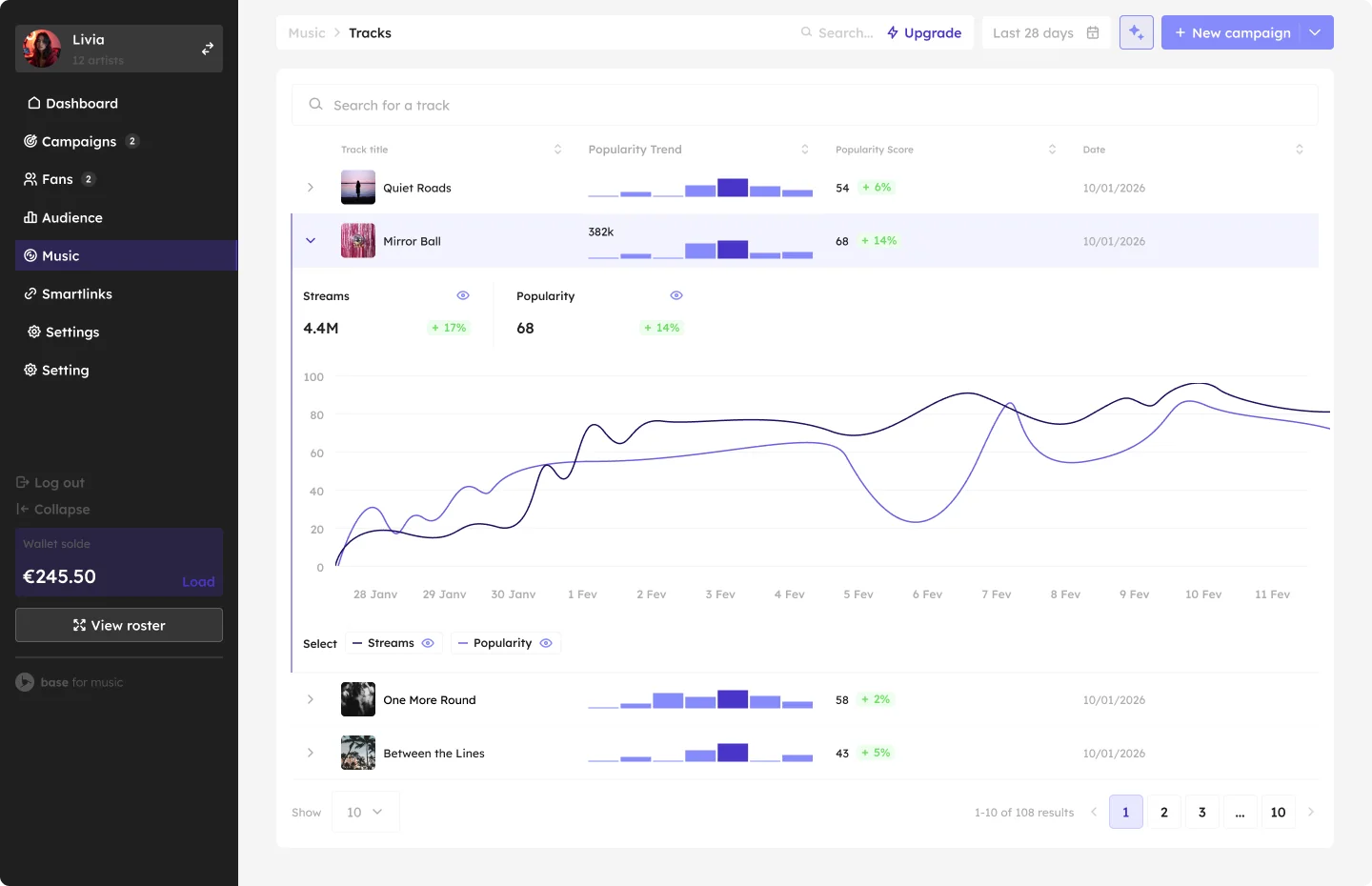
  • Track streams, listeners, followers, and popularity score at both artist and track level
  • Look for cross-platform confirmation: Spotify listeners rising alongside social engagement and playlist activity is a stronger signal than one metric alone
  • A spike in one metric often creates a ripple effect: saves, playlist adds, and follower growth tend to follow
  • Quality matters as much as volume: saves and playlist adds indicate deeper interest than passive streams

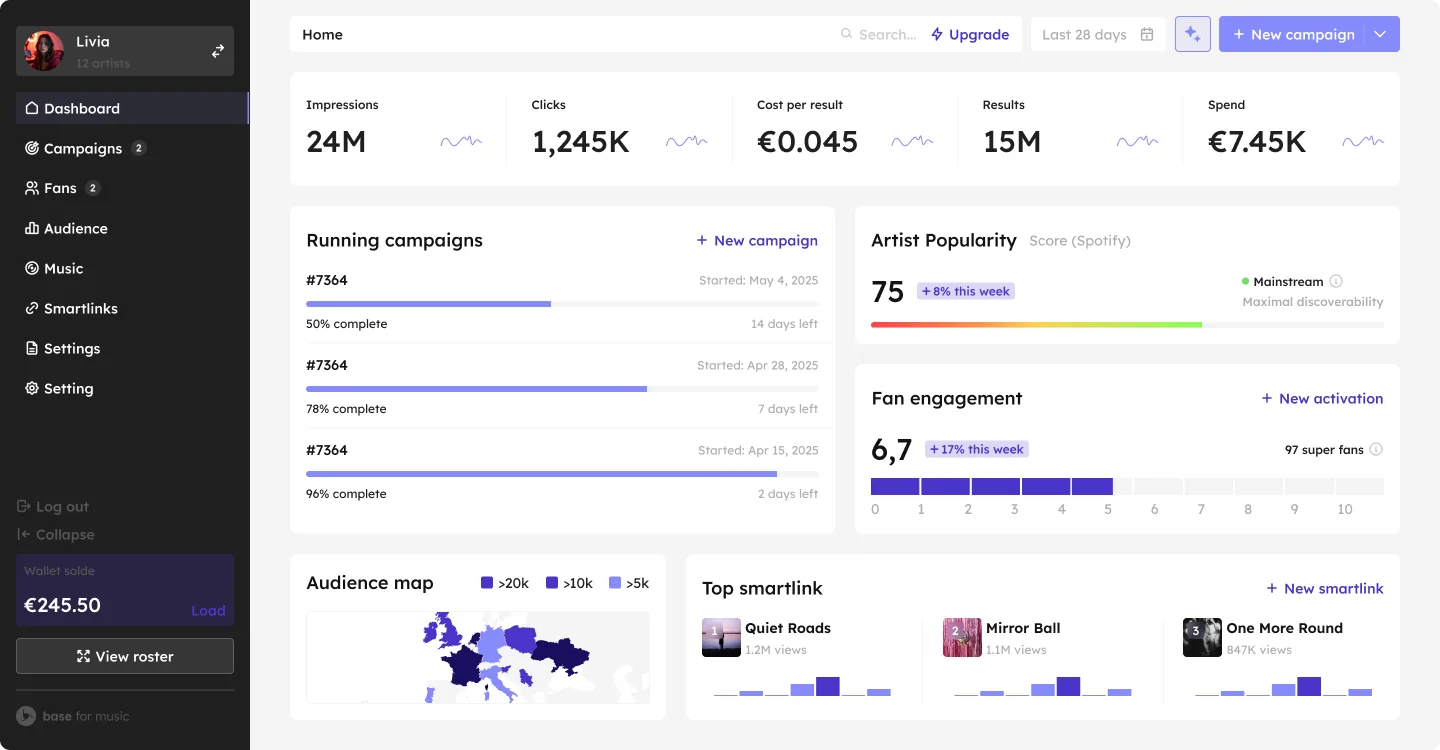
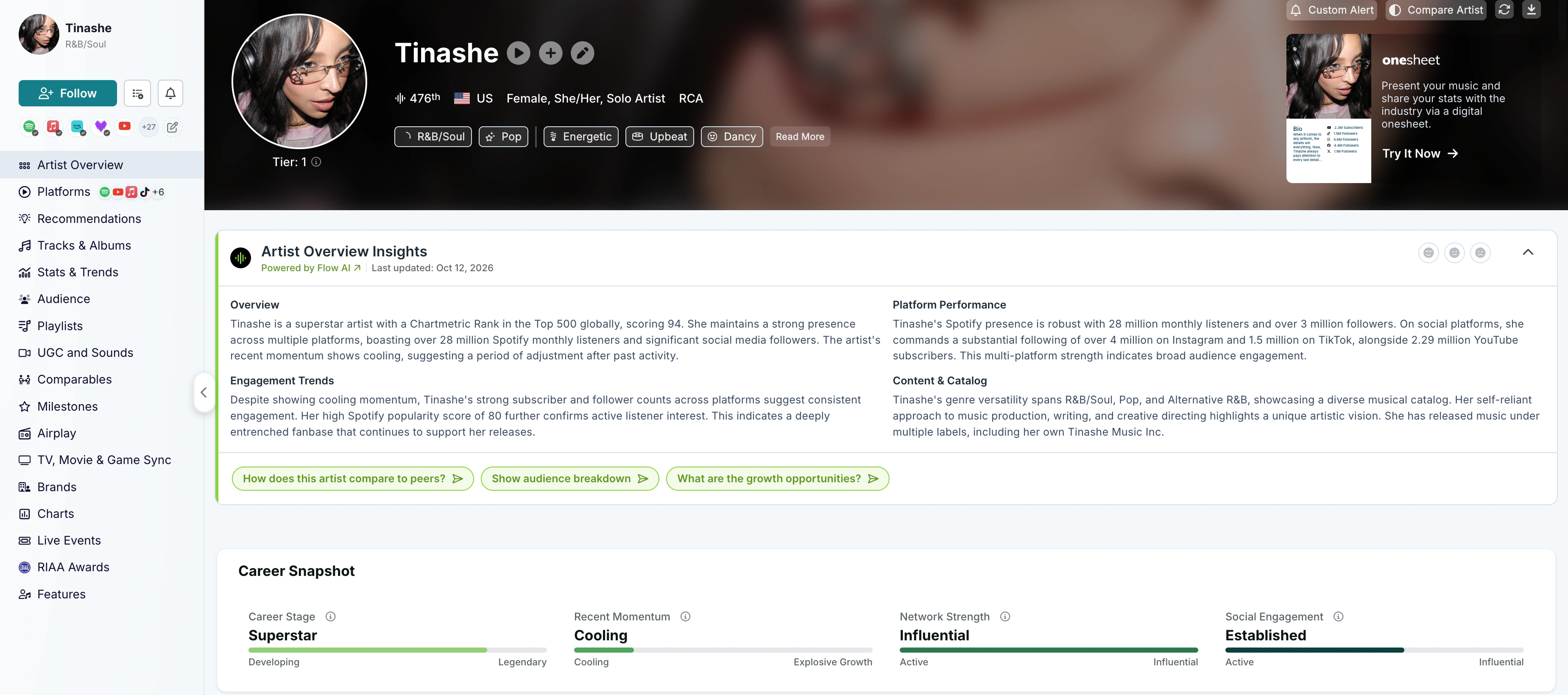
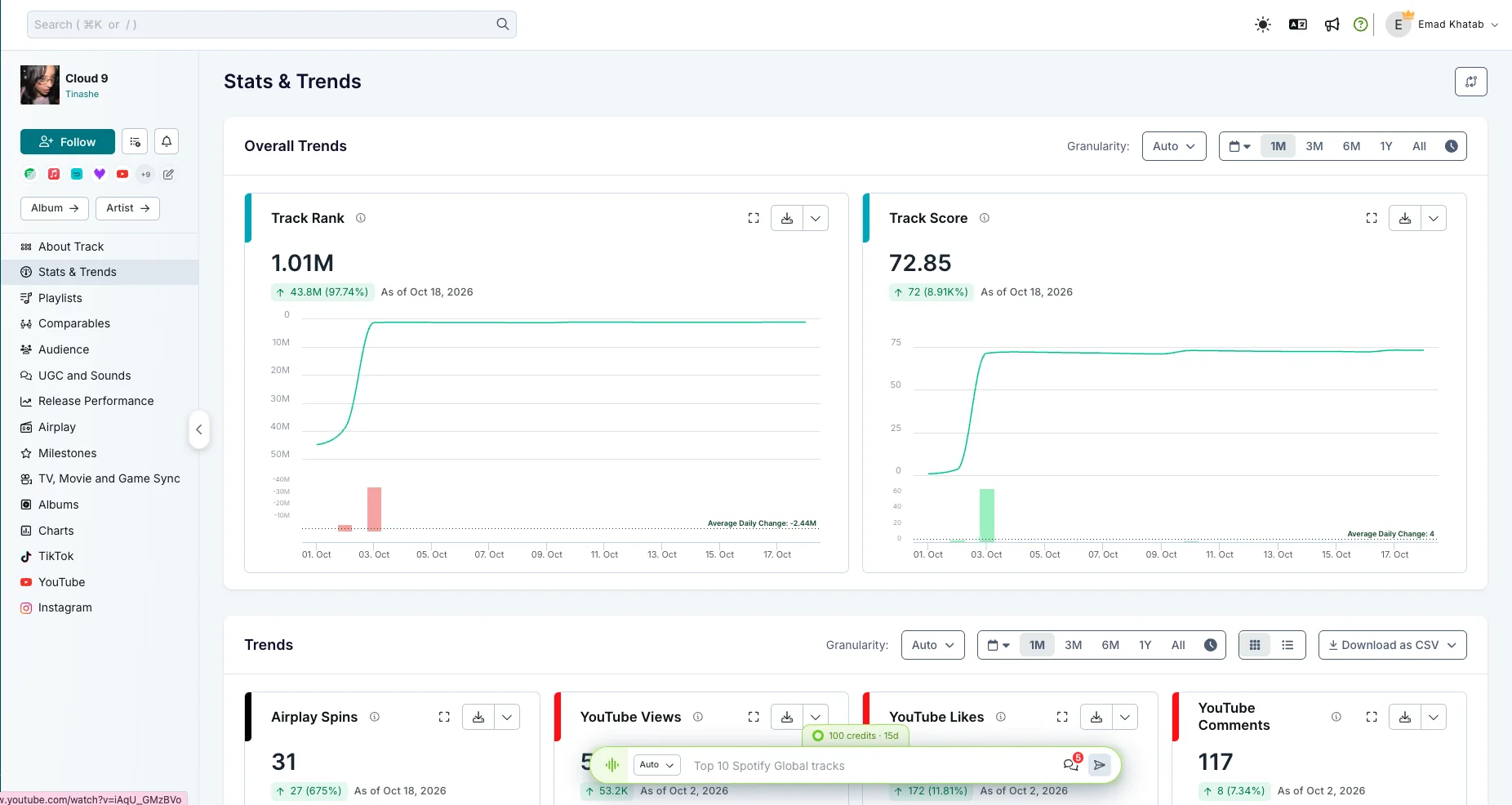
When an upward trend appears across multiple signals, that's the window to activate paid campaigns. Amplifying an existing organic signal is far more efficient than trying to create one from scratch. Chartmetric's and Base for Music’s Artist Dashboards both centralize these signals.

Benchmarking an artist against similar profiles

Raw numbers become much more useful when they have context. Comparing an artist with others at a similar career stage, within a similar genre, or with an overlapping audience can show whether their trajectory is unusual or simply reflects what's happening across their wider market.

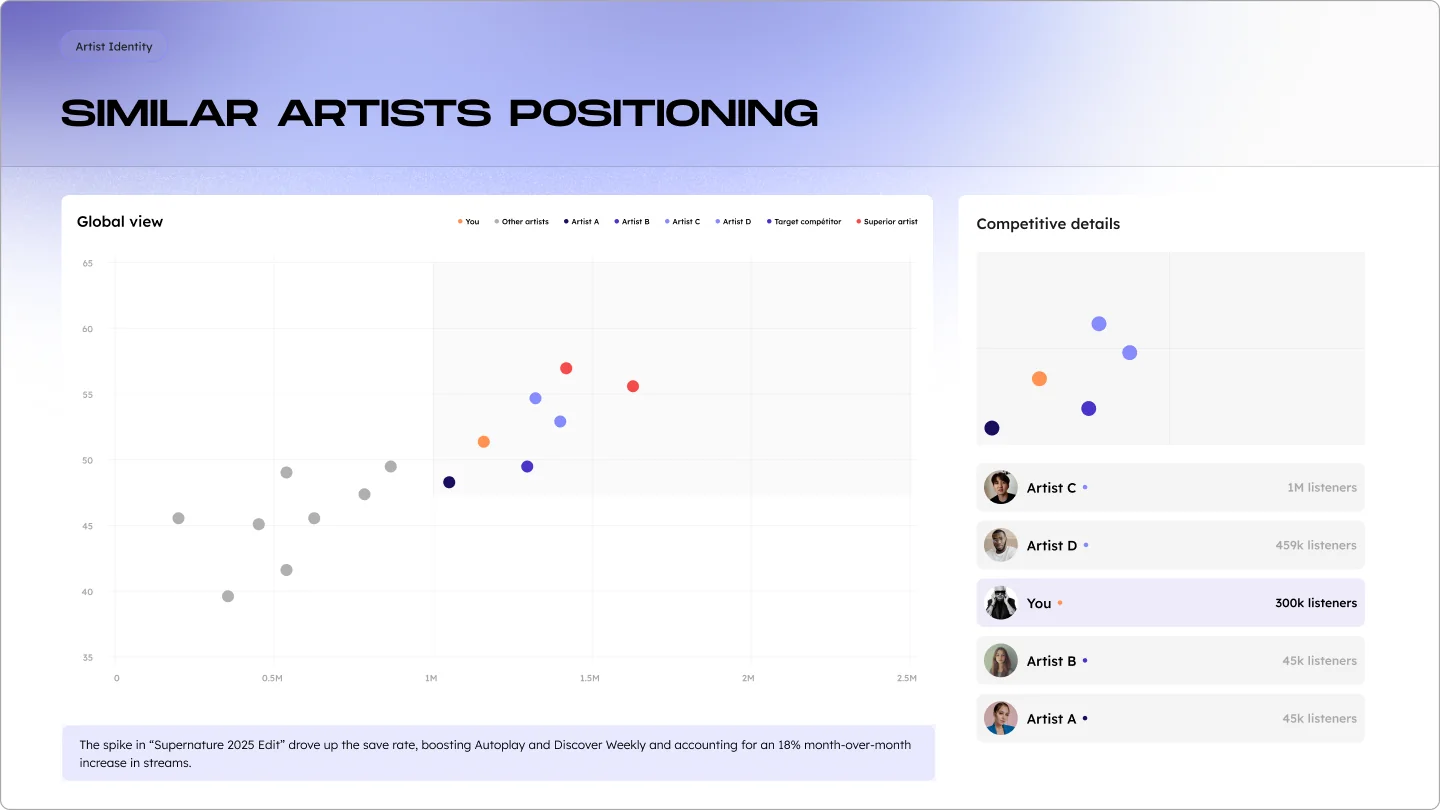
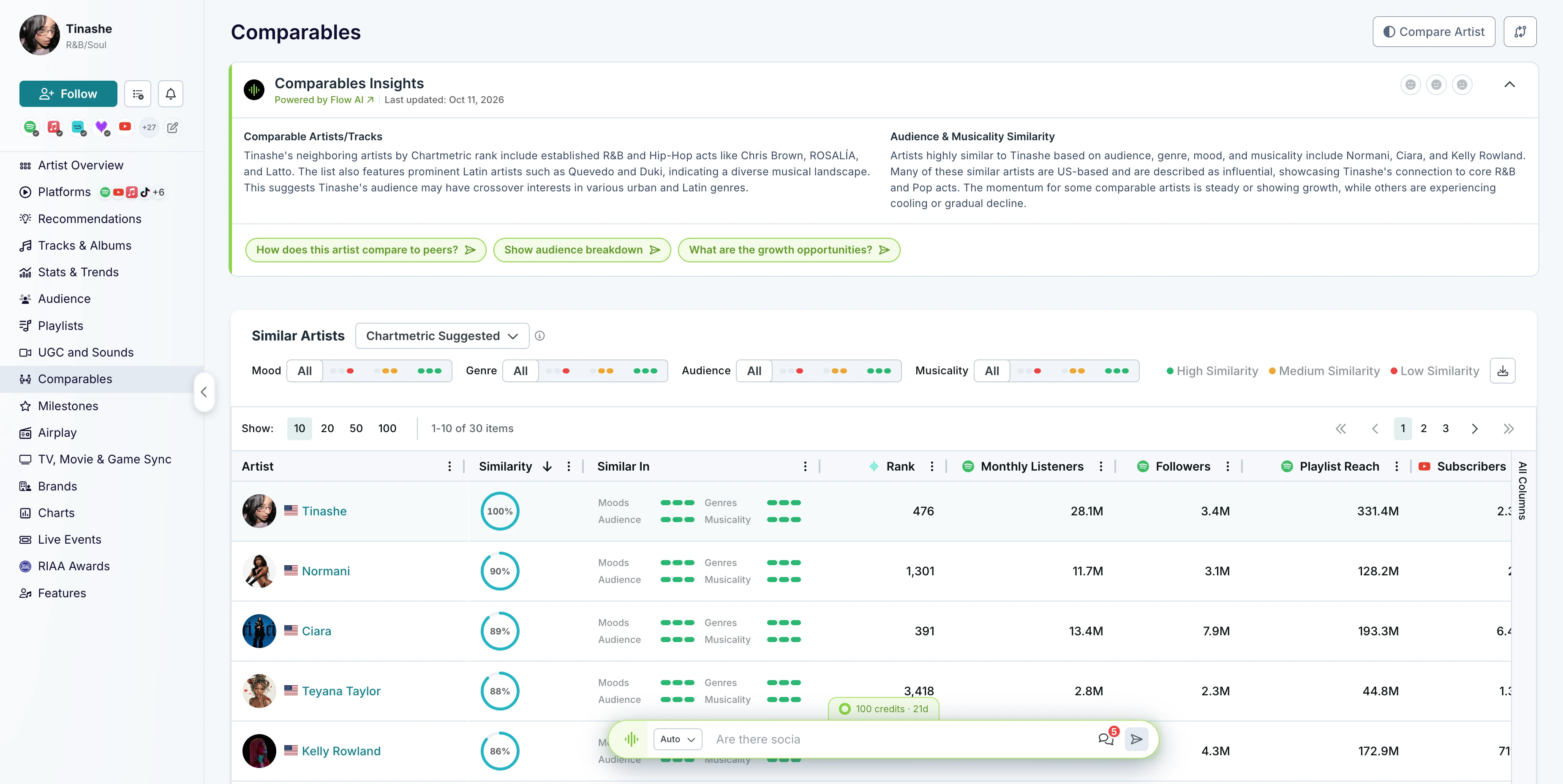
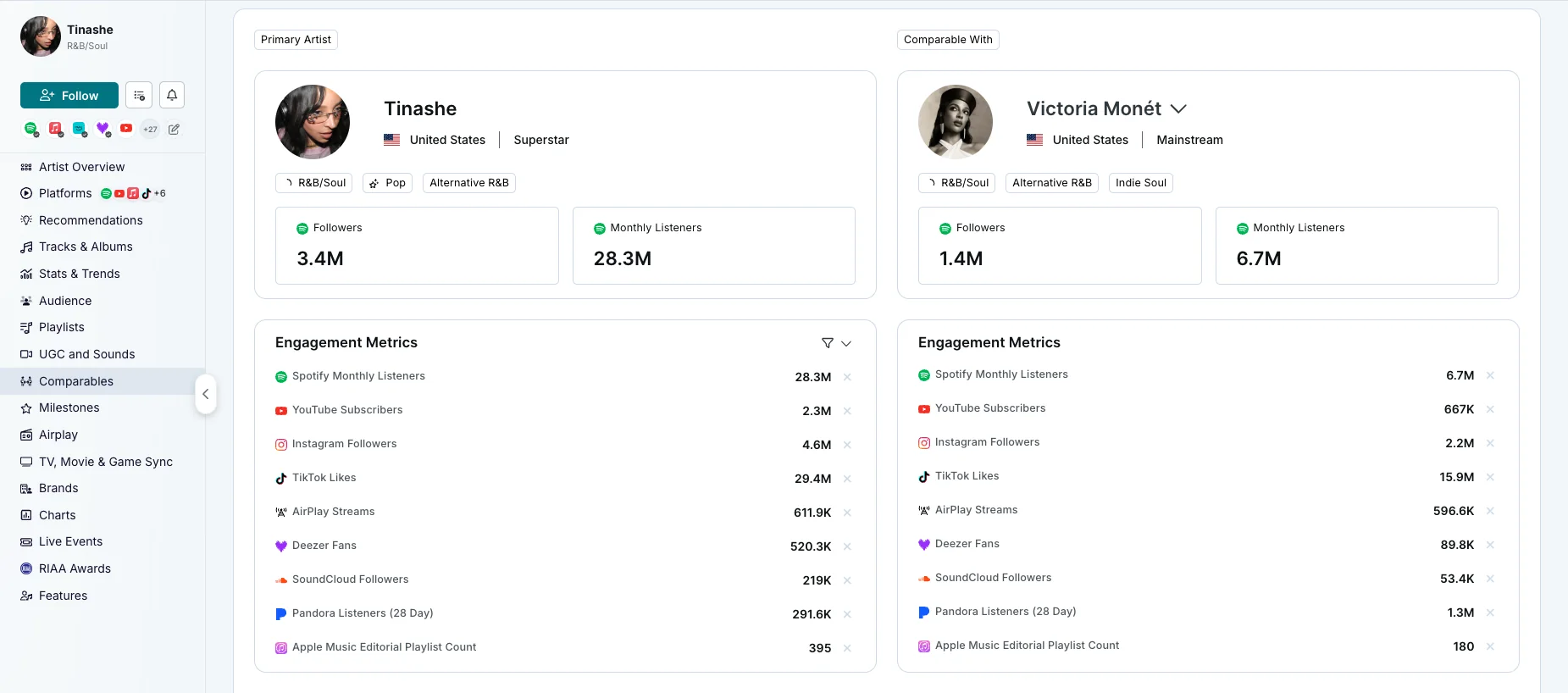
Chartmetric's Comparables and Base for Music's Similar Artist Report make it possible to map competitive trajectories across streaming, social, genres, and playlists; positioning an artist within their niche against key competitors. Beyond benchmarking, competitor audiences represent a high-potential pool of future fans, and a foundation for the targeting strategy that follows.

Geography as a growth lever

An artist's biggest market isn't automatically their biggest opportunity. The more useful question: where could we grow next?

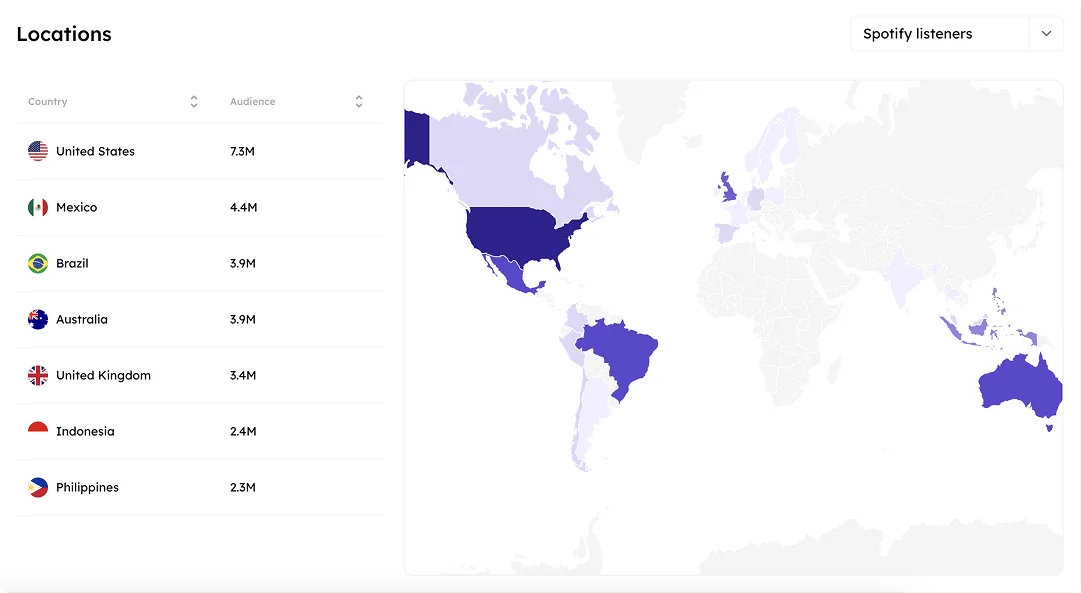
  • Identify territories where an artist already has traction: Spotify listener data, social audience location, historical campaign performance
  • Look for markets where growth rate is accelerating, not just where the audience is largest
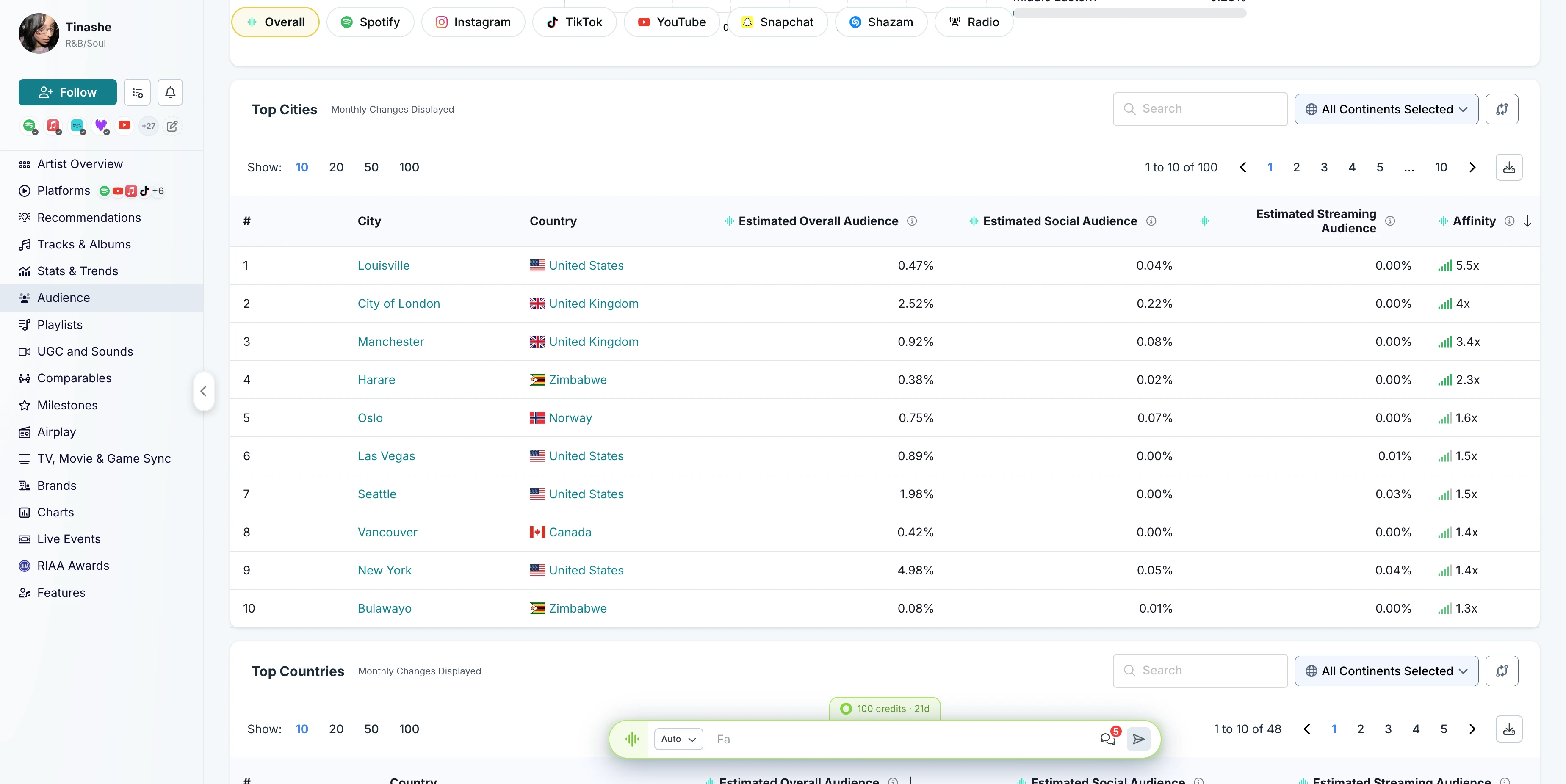
  • Chartmetric audience breakdown by cities and countries and Base for Music's Top Territories module help surface emerging markets and prioritize territories where paid spend is most likely to build on an existing foundation

Leveraging fan and audience data

Streaming data tells you who's listening. Fan opt-in data (collected through pre-saves, newsletter signups, or direct-to-fan platforms) tells you who cares enough to raise their hand.

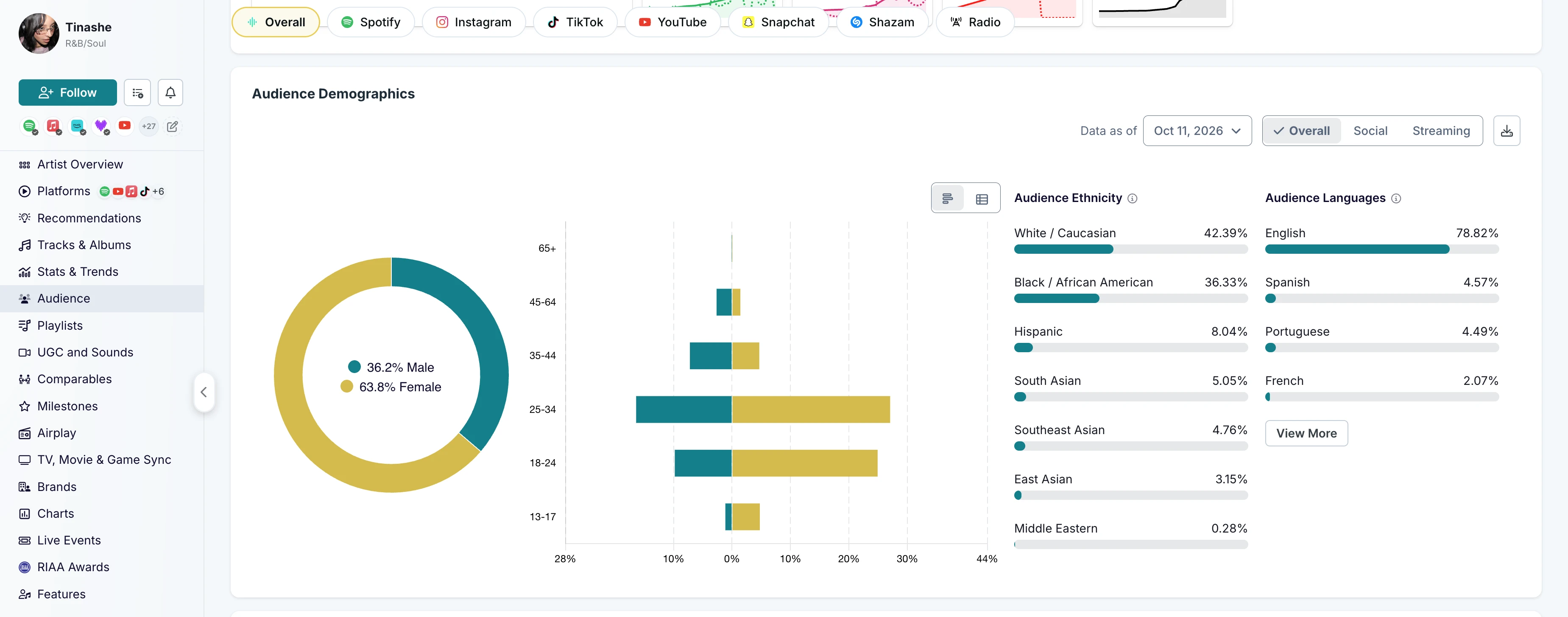
Cross-referencing what those fans listen to, where they're located, and how they engage, alongside broader audience demographics and affinity data from tools like Chartmetric and Base for Music, creates a targeting strategy that goes beyond generic demographics, reaching the people most likely to convert into long-term fans.

Chartmetric audience demographics dashboard with audience ethnicity and language summaries, gender split, and age distribution.
Chartmetric

2. Building a Campaign Strategy from Your Data

Start by establishing an artist’s current performance across streaming, social, and audience metrics to identify where momentum is building. From there, define a clear campaign objective, whether that’s reaching new listeners, growing streams around a release, or expanding into a new market. This helps prioritize the opportunities that best align with the campaign’s goals.

From signal to targeting

Once the objective is clear, the translation to targeting is straightforward, provided the groundwork has been done properly:

  • Competitor fanbases become concrete audience segments, narrowed by geography, demographics, and behavior rather than treated as a single broad target
  • Territories are prioritized based on the objective: established markets for converting existing demand; fast-growing markets for developing a new audience
  • Fan opt-in data informs lookalike audience construction, reaching listeners who mirror the profile of the artist's most engaged fans
  • Creative direction follows the same logic: messaging and calls to action adapted to what's already resonating with a specific audience or territory

The goal is to use data to make more informed decisions, ensuring every campaign starts with a clear strategy behind its targeting, creative, and investment choices.

Choosing the right platforms and timing

Platform selection should follow both the campaign objective and where momentum is developing:

  • Strong TikTok or Instagram engagementshort-form video takes priority
  • Strong Spotify listener growth and playlist addsstreaming-focused formats
  • Accelerating YouTube engagementYouTube becomes a greater priority

As a general framework:

  • Spotify Marquee & Showcasere-engage active or previously active listeners
  • Spotify Displayexpand reach through similar artist audiences and relevant playlists
  • Metadrive streams, engagement, and fan opt-in collection via tracked music links
  • YouTube & TikTokreach new audiences through content-driven discovery

Timing follows the same logic. Building organic momentum calls for growth-focused campaigns that amplify it. Stable streams but plateauing engagement calls for a retention-focused approach. Territory behavior, local calendars, and platform consumption patterns can further shape the schedule.

3. Turning Insights into Campaigns

With growth levers identified and the strategy in place, it's time to activate. But execution is an ongoing process, not a one-time decision.

From analysis to activation

Before launch, define what success looks like. Establish a baseline and agree on primary outcomes: incremental listeners, saves, follows, playlist adds, social engagement. Structure reporting by territory, platform, audience segment, and creative from day one.

A phased approach works best:

  • Start with broader territory and audience targeting to gather initial performance signals
  • Test multiple similar artist segments in parallel to identify which fanbases respond best
  • Narrow down progressively to the combinations that are demonstrating real traction
Base for Music

Real-time reallocation

Strong attribution connects a specific campaign, platform, or creative to a specific outcome (a stream, a save, a fan opt-in, etc.) not just aggregate performance. Base for Music's tracked music links, for instance, enable precise attribution of every stream back to the ad that generated it. The more precisely attribution is set up, the faster the learning compounds.

After each review window, classify each campaign segment:

  • Scale: strong fan actions and positive momentumincrease budget gradually
  • Optimize: good awareness but weak conversionrevise creative or audience before adding spend
  • Pause or reduce: weak results or below benchmarkstop
  • Keep testing: promising signals, insufficient datahold a controlled budget

Avoid reallocating on a single day of data. Move budget toward the best-performing territory–platform–creative combinations, while keeping a test budget for emerging markets.

4. From Campaign Results to Smarter Future Decisions

The data generated during a campaign is as valuable as the results themselves: it's what turns a one-off activation into a repeatable fan acquisition engine.

Measuring impact on organic metrics

Start with the core indicators:

  • Stream trajectory and monthly listener evolution
  • Playlist additions and Shazam activity in targeted territories
  • Popularity score trajectory and stream trends broken down by source
  • Social engagement growth and follower development
  • Fan opt-in growth and audience development

Treat post-campaign changes as evidence of impact, not automatic proof of causality. Always compare against the pre-campaign baseline, factor in seasonality, and use matched markets where possible.

Chartmetric and Base for Music centralize these signals, making it easier to assess whether paid activity contributed to sustained growth or just a temporary spike.

Refining the benchmark

After each activation, revisit the similar artist analysis on Chartmetric and Base for Music's Similar Artist Report:

  • Has the artist closed the gap with key competitors?
  • Have new benchmarks emerged that weren't relevant before?
  • Has the audience profile shifted in ways that open up new targeting opportunities?
Chartmetric artist comparison showing Tinashe and Victoria Monét with audience totals and engagement metrics across platforms.
Chartmetric

Over time, Chartmetric and Base for Music become less reporting tools and more a compounding growth engine: one that makes fan acquisition ROI increasingly predictable.

From Ad Spend to Predictable Fan Acquisition

The labels that win at fan acquisition aren't the ones with the biggest budgets. They're the ones who spend with intention, grounded in data and built to learn from every campaign.

  • Identify the opportunity before spending a dollar
  • Build a strategy grounded in streaming intelligence, audience data, and competitive benchmarks
  • Execute with precision across the right platforms, at the right moment, with the right targeting
  • Measure what actually matters - fan growth and attributable ROI
  • Feed those learnings back into the next campaign, progressively sharpening every decision

When Chartmetric's market intelligence combines with Base for Music's data centralization, campaign execution, and attribution capabilities, that loop closes completely. With the right data and the right process, growth levers stop being guesswork, and fan acquisition becomes predictable.

About the Partners

This playbook was developed in collaboration between Chartmetric and Base for Music, bringing together music industry intelligence and data-driven marketing expertise. Together, we aim to help artists and their teams turn data into actionable strategies, make more informed marketing decisions, and build sustainable audience growth.

Chartmetric

Chartmetric is a music data analytics platform that helps artists, labels, managers, and industry professionals navigate the global music market. By bringing together streaming, social, audience, playlist, chart, and other music data, Chartmetric helps the industry track artist performance, identify emerging trends, and uncover growth opportunities.

chartmetric.com

Base for Music

Base for Music is a data-driven marketing partner for artists, labels, and music companies. Its marketing OS connects advertising spend with audience, CRM, and streaming data, helping teams measure campaign performance, optimize their strategies, and drive growth with clear attribution.

baseformusic.com